
Starting an ice factory is not just a matter of buying an ice machine and connecting it to water and electricity. A profitable ice factory is a complete production and distribution system. It needs the right ice type, stable daily capacity, clean water treatment, proper storage, safe handling, efficient packing, reliable refrigeration, and a layout that allows workers and trucks to move without wasting time.
The first question is not “Which ice machine should I buy?” The better question is “Who will use the ice, how much ice do they need every day, and what form of ice will create the highest practical value?”
A seafood port, a packaged edible ice supplier, a concrete batching plant, a food processing factory, and a hotel distributor may all need ice, but they do not need the same type of factory. Before requesting quotations, the business model must be clear enough to guide equipment selection.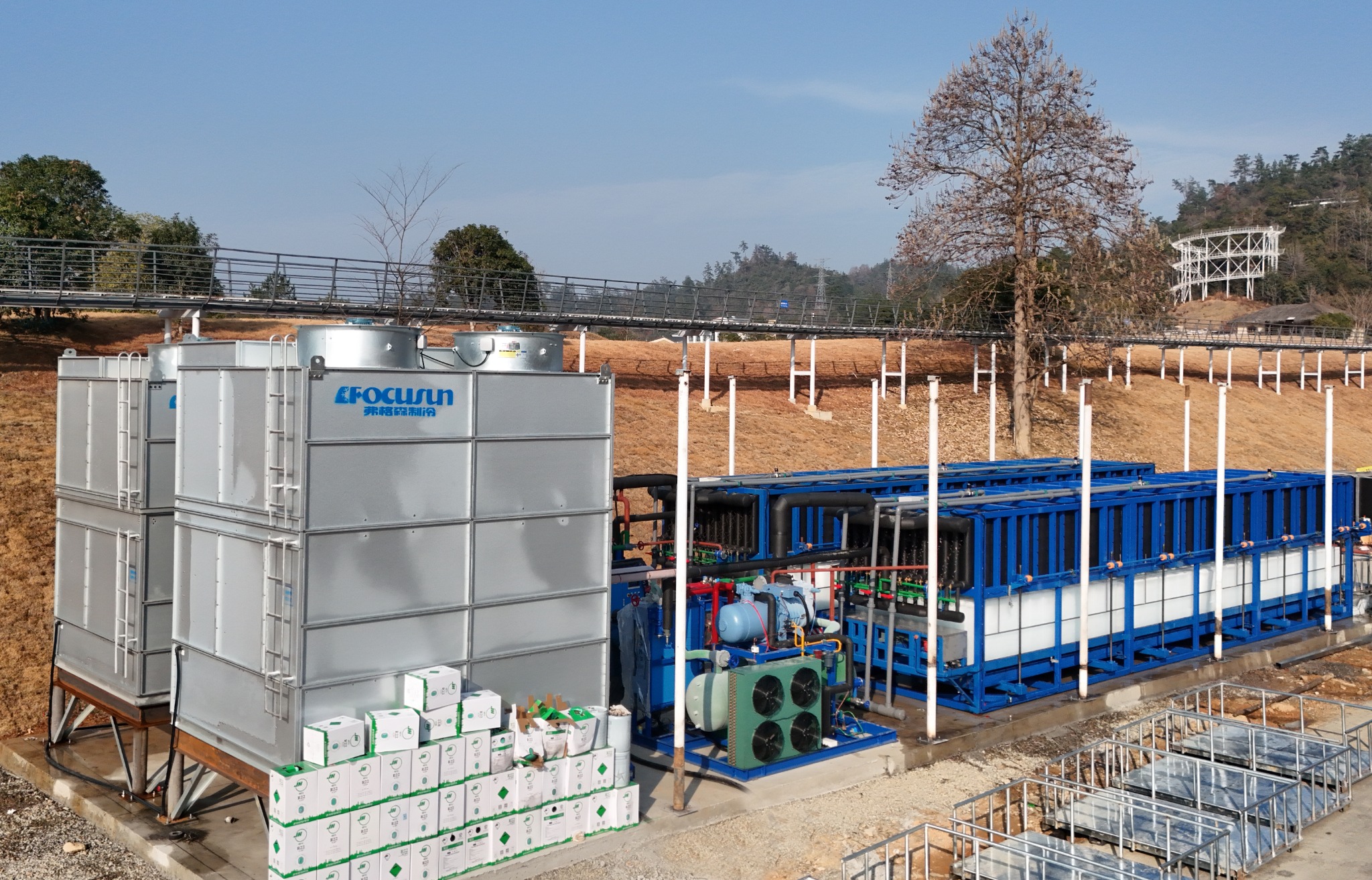
An ice factory is a production site designed to make, store, handle, pack, and dispatch ice at commercial or industrial scale. The ice machine is the core equipment, but it is only one part of the project.
A complete ice factory may include:
For a broader project-level reference, this ice factory setup and equipment cost guide is useful when comparing a full ice factory system instead of only a single ice maker.
The ice factory design should start from the customer, not from the machine catalog.
For example, a local packaged ice supplier may sell 5 kg or 10 kg bags to convenience stores, restaurants, and event companies. This business needs clean edible ice, stable bag weight, strong sealing, a packing area, and a frozen storage room for finished bags.
A fishery ice plant may sell bulk ice to fishing boats, seafood markets, and processing plants. This business may need flake ice, block ice, slurry ice, or a combined system depending on the seafood journey. A seafood operation can refer to fishery preservation ice solutions when deciding how ice should move from catch to cold room.
A concrete cooling project is different again. The buyer may not care about edible quality or retail packing. The key issues are tons per day, cooling capacity, discharge speed, reliability, and integration with batching operations.
Before choosing equipment, define:
This step prevents one of the most common mistakes: buying a machine that can make ice but cannot support the actual business process.
Different ice types solve different problems. There is no single “best” ice for every ice factory.
|
Ice Type |
Best Applications |
Main Advantages |
Main Limitations |
|
Block ice |
Long-distance seafood transport, remote areas, dockside supply |
Slow melting, strong holding time, good for transport |
Needs cutting, crushing, lifting, or more labor |
|
Flake ice |
Seafood, food processing, fish markets, concrete cooling |
Fast cooling, wide surface contact, easy to spread |
Melts faster than block ice if storage is poor |
|
Tube ice |
Edible ice, beverage service, packaged ice, chilled distribution |
Clean appearance, easy bagging, good flowability |
Less surface coverage than flake ice |
|
Cube ice |
Hotels, restaurants, coffee shops, bars, retail supply |
Familiar appearance, good for drinks |
Usually more suitable for commercial or edible ice markets |
|
Plate ice |
Large industrial cooling, seafood, concrete cooling |
Large capacity, good cooling performance |
Needs suitable handling and crushing design |
|
Slurry ice |
Delicate seafood, onboard cooling, pumpable cooling systems |
Very fast, gentle, full-contact cooling |
Requires tanks, pumps, and more system planning |
If the factory serves seafood buyers, flake ice is often chosen because it fills gaps between fish and cools the product surface quickly. For food factories and large seafood processors, this industrial flake ice machine selection guide can help clarify when flake ice is the right production base.
If the business sells edible ice for restaurants, hotels, supermarkets, or drink shops, tube ice or cube ice may be more practical. The focus becomes hygiene, water treatment, packing, appearance, and consistent bag weight. For this kind of business, the article on edible ice production plant planning is especially relevant because it explains how clean ice making, handling, storage, and packaging work together.
Daily ice capacity should be calculated from real demand, not only from a supplier’s standard machine rating.
A simple starting formula is:
Required daily ice production = daily demand + storage buffer + peak demand margin + maintenance margin
For example:
In this case, a 10-ton machine may look closely, but it may not be enough during peak periods. A 12-ton or 15-ton system may be more practical depending on storage, delivery schedule, and growth plan.
For seafood cooling, a rough estimation can be based on product weight:
For example, if a seafood processor handles 10 tons of fish per day and uses a 40% ice ratio, the daily ice requirement is about 4 tons. If the site has hot weather, long delivery routes, or poor insulation, the requirement may be higher.
For edible ice distribution, estimate by sales units:
For example:
For large projects where rated output and real operating output must stay stable, the article on choosing an industrial ice maker for stable daily output is a useful reference.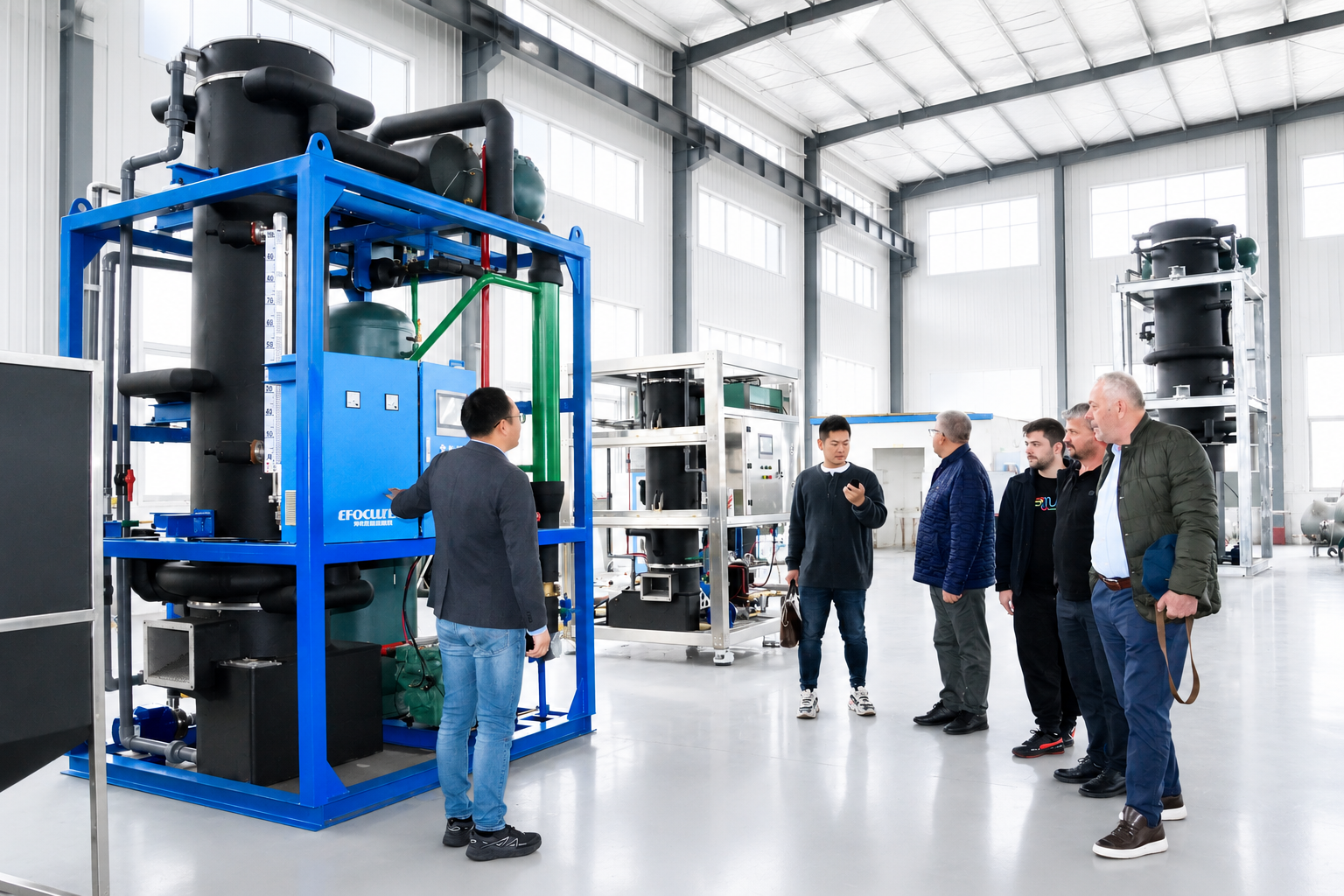
Many new investors focus on daily production capacity and forget storage. This creates daily bottlenecks.
A machine may produce 10 tons per day, but if the factory can store only 2 tons, the operation becomes fragile. If trucks are delayed, packing slows down, or customers arrive at the same time, production may need to stop even when the machine itself is working correctly.
Storage planning depends on ice type.
Flake ice may need an insulated ice room with rake discharge, screw conveyor, or manual loading system. Tube ice and cube ice may need storage bins, hoppers, and packing lines. Block ice may need storage space, lifting tools, cutting machines, or crushers. Packed edible ice usually needs a cold room to hold finished bags before delivery.
If the ice factory also needs refrigerated delivery or finished product storage, Focusun’s article on cold storage and delivery systems is relevant for planning the cold-chain side of the project.
A practical rule is to prepare storage for at least part of the peak daily output. Small local factories may need 30–50% of daily output as storage. Larger distribution businesses may need one full day or more, especially if delivery is scheduled in batches.
Automation should match labor cost, hygiene requirements, production scale, and business risk.
A small ice factory may begin with manual loading and semi-automatic packing. This lowers the initial investment, but it requires more workers and stronger daily management.
A medium factory may use conveyors, hoppers, weighing machines, and semi-automatic bagging. This improves speed and reduces manual contact with ice.
A large edible ice plant may need automatic conveying, automatic weighing, automatic bagging, coding, counting, and finished bag transfer. In packaged ice businesses, the packing section often decides whether the factory can sell the ice efficiently. A 20-ton ice machine does not create a 20-ton packaged ice business if the packing line can only handle 8 tons per day.
For buyers planning bagged ice, this automatic ice packing machine guide is helpful when comparing bag size, weighing accuracy, sealing quality, labor level, and production speed.
Step 6: Check Site Conditions
The factory site affects equipment design more than many buyers expect.
Before finalizing equipment, check:
Ambient temperature is especially important. A machine operating in a tropical coastal area will face different conditions than a machine installed in a cool inland city. High ambient temperature, warm water, poor ventilation, and unstable power can all reduce actual ice output.
For air-cooled systems, hot air discharge must not recirculate into the condenser. For water-cooled systems, cooling water quality and supply stability must be confirmed. For coastal or marine sites, corrosion resistance becomes more important.
A good ice factory layout saves labor every day. A poor layout creates wasted movement, blocked access, contamination risk, and maintenance problems.
A practical material flow may look like this:
Water treatment → ice machine → ice storage or hopper → conveying → weighing and packing → finished ice-cold room → loading area
For edible ice, clean areas and dirty areas should be separated. Operators should avoid walking through wet loading zones and then entering the packing area. Drainage should be designed so meltwater does not flow into clean ice handling areas.
For fishery ice plants, the layout should support fast loading into boxes, trucks, or fishing vessels. For block ice factories, space for lifting, cutting, crushing, and moving blocks is important. For flake ice plants, discharge equipment and storage room access should be planned carefully.
Maintenance access must also be protected. Compressors, condensers, pumps, valves, control panels, and evaporators need service space. A crowded machine room may save floor area at the beginning but increase downtime later.
The cost of starting an ice factory depends on more than the ice machine price.
Main cost items include:
When comparing suppliers, ask whether the quotation covers only the machine or the complete operating system. A low machine price can become expensive if storage, packing, installation, drainage, control systems, or spare parts are missing.
A serious quotation should make the scope clear. It should show what is included, what is optional, and what must be prepared locally.
Some buyers choose a machine size first and then look for customers. This is risky. The ice type, bag size, storage method, and delivery model should come from market demand.
Block ice, flake ice, tube ice, cube ice, and slurry ice are not interchangeable. A seafood buyer may need fast surface cooling, while a retail packaged ice buyer may need attractive, clean, baggable ice. The wrong ice type can make the factory hard to sell even if the machine works.
Production capacity without storage is unstable. Ice factories usually need a buffer between production and delivery. Storage must be designed together with the machine.
Hot weather, warm water, and poor ventilation can reduce real output. Always ask how the machine performs under local conditions, not only under standard test conditions.
The cheapest equipment may consume more power, need more labor, break down more often, or require expensive modifications later. Compare total system cost and operating cost.
For bagged ice, the packing line must match production. If the ice machine makes ice faster than the packing machine can handle, the factory will face bottlenecks every day.
Ice factories are production businesses. Downtime means lost sales. Critical spare parts, operator training, and supplier support should be planned before commissioning.
|
Application |
Recommended Ice Type |
Key Equipment |
Main Design Priority |
|
Seafood landing port |
Flake ice, block ice, slurry ice |
Ice machine, ice room, conveyor, loading system |
Fast cooling and bulk handling |
|
Fishing vessel |
Seawater flake ice or slurry ice |
Marine ice machine, corrosion-resistant parts |
Compact installation and onboard reliability |
|
Packaged edible ice |
Tube ice or cube ice |
Water treatment, ice maker, hopper, packing machine, cold room |
Hygiene, bagging, appearance, storage |
|
Food processing |
Flake ice or tube ice |
Food-grade machine, clean handling, process storage |
Product safety and stable cooling |
|
Concrete cooling |
Flake ice or plate ice |
Large-capacity ice maker, storage, discharge system |
High output and batching integration |
|
Hotel and catering supply |
Cube ice or tube ice |
Ice maker, storage bin, packing or delivery system |
Clean ice and flexible daily supply |
Before asking for an ice factory quotation, prepare the following information. The more complete the information is, the more accurate the equipment proposal will be.
How much does it cost to start an ice factory?
The cost depends on capacity, ice type, automation level, storage requirement, packing system, cooling method, and site conditions. A small local ice factory with manual handling costs much less than a fully automatic edible ice plant with water treatment, weighing, bagging, coding, cold storage, and truck loading. When comparing prices, separate the ice machine cost from the full project cost. Civil work, power supply, drainage, installation, spare parts, and cold storage can significantly affect the final investment.
What is the best ice type for a new ice factory?
The best ice type depends on the target market. Tube ice and cube ice are commonly used for edible ice and beverage supply because they look clean and are easy to pack. Flake ice is practical for seafood, food processing, and concrete cooling because it provides fast surface contact. Block ice is useful for long-distance transport and remote areas because it melts slowly. Slurry ice is suitable for delicate seafood and fast full-contact cooling, but it requires a more complete system design.
How do I calculate the right daily ice production capacity?
Start with real daily demand, then add peak-season margin, storage buffer, delivery schedule, and maintenance margin. For example, if the average demand is 10 tons per day and peak demand is 30% higher, the practical target may be 13 tons per day before adding extra margin for growth. For seafood, calculate ice demand as a percentage of product weight. For packaged ice, calculate by number of bags, weight per bag, daily sales volume, and packing loss.
Do I need an ice storage room for an ice factory?
In most cases, yes. Ice storage is the buffer between production and sales. Without storage, the factory depends too heavily on perfect timing. Truck delays, sudden orders, packing slowdowns, or maintenance can interrupt the whole operation. The storage design depends on ice type. Flake ice may need an insulated ice room and discharge system. Packed edible ice usually needs a cold room for finished bags. Block ice requires space for stacking, lifting, cutting, or crushing.
Is an automatic ice packing machine necessary?
It is not always necessary for a small factory, but it becomes important when selling bagged ice at scale. Manual packing can work for low output or early-stage businesses, but it increases labor cost and product contact. Automatic packing improves weighing accuracy, sealing consistency, hygiene, and production speed. For retail ice, supermarkets, convenience stores, and food service buyers usually expect clean bags, stable weight, and reliable sealing.
How long does it take to install an ice factory?
The timeline depends on project size, site preparation, shipping distance, local utilities, and automation level. A small standard system can be faster to install if the site already has power, water, drainage, and ventilation prepared. A larger factory with cold storage, packing equipment, conveyors, and customized layout needs more time for design confirmation, production, shipping, installation, commissioning, and operator training. Site readiness is often the biggest factor affecting the real schedule.
What information should I give a supplier before asking for a quotation?
Provide the application, required daily capacity, preferred ice type, installation country, ambient temperature, water source, power supply, site dimensions, storage requirement, packing requirement, automation level, budget range, and expected delivery time. If the factory is for seafood, include the daily seafood volume and transport route. If it is for edible ice, include bag size, bag weight, hygiene requirements, and sales channels. This allows the supplier to design a workable ice factory instead of quoting only a basic machine.
