
In food production, cooling at the end of the line should not be treated as a secondary step. It is part of quality control. A cooked meal left too long before chilling, a leafy vegetable carrying field heat, or a bakery product waiting hours before packing can all create similar problems: shorter shelf life, unstable texture, higher moisture loss, and more waste.
Vacuum cooling in food processing solves this stage by removing heat quickly inside a closed chamber. Under vacuum conditions, moisture inside the food or on its surface evaporates at a lower temperature. That evaporation carries heat away, creating fast and uniform cooling, especially for porous, moist, or high-surface-area foods.
Based on temperature control solutions for Food Processing, Focusun provides vacuum cooling, cold rooms, blast freezing, ice machines, water chillers, and other refrigeration equipment. A Vacuum Cooler can be used as a standalone solution for manufacturers that need precise cooling control, or it can be integrated into a broader food-processing cooling system.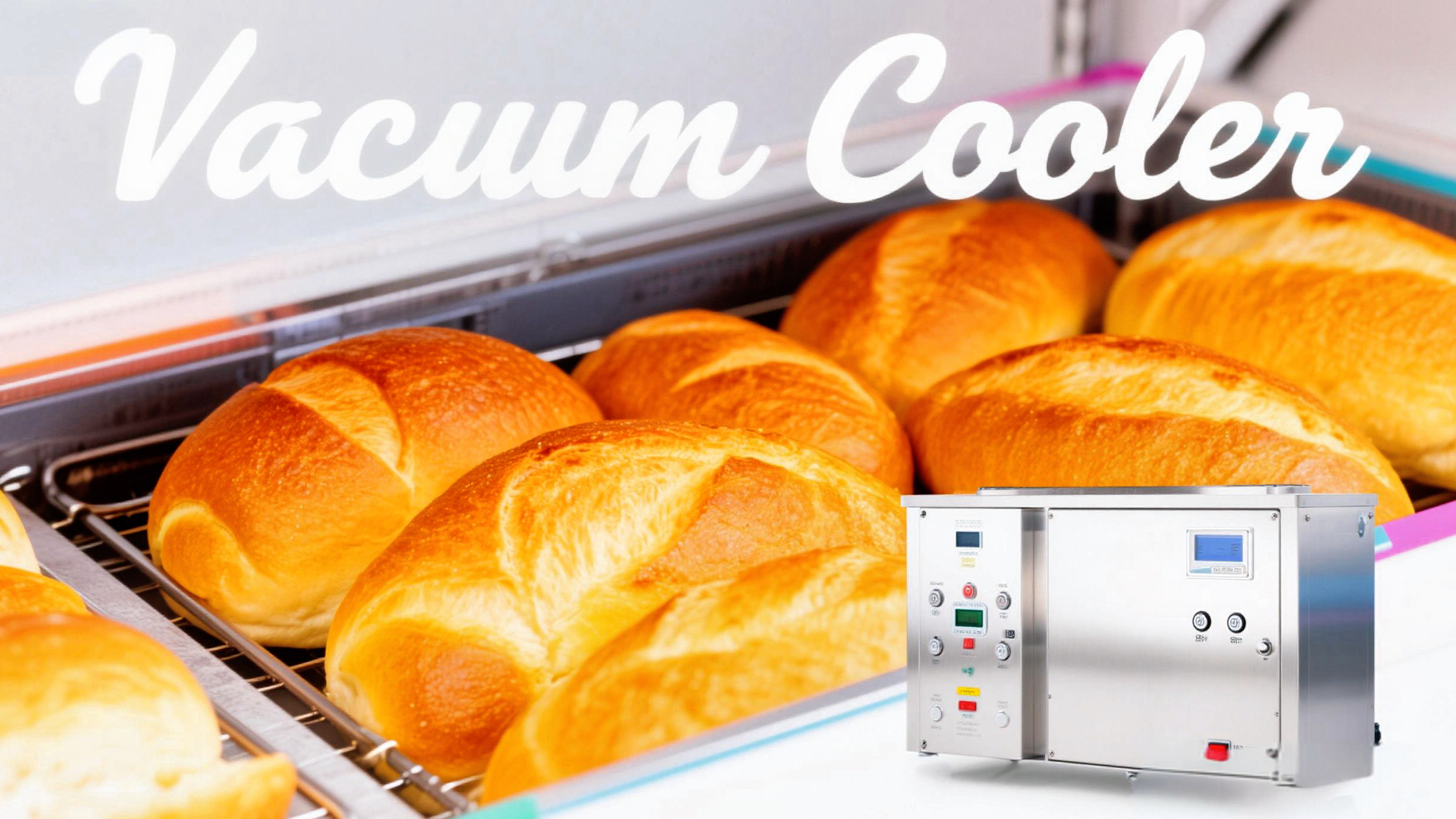
Vacuum cooling is a rapid cooling method that lowers product temperature by reducing pressure instead of depending only on cold air. Food is placed inside a sealed chamber. As pressure drops, water evaporates at a lower temperature. This phase change removes heat from the product and rapidly lowers its core temperature.
This process is different from a standard Cold Room. A cold room mainly cools products through chilled air circulation and is better suited for stable storage. Vacuum cooling is usually selected when food needs to be cooled quickly before packaging, storage, cutting, or shipping.
Vacuum cooling is also different from freezing. Normal vacuum cooling does not freeze the final product. If freezing is required after rapid cooling, the process can be followed by a Blast Freezer or another freezing system.
Many foods pass through a high-risk temperature stage after cooking, baking, washing, harvesting, or thermal treatment. If cooling is too slow, the product may lose moisture, change texture, or remain in unstable storage conditions for too long. For high-volume factories, slow cooling also occupies floor space and delays packing.
Vacuum cooling reduces this waiting time. A product that may take hours to cool in ambient air or a traditional storage room can often be prepared for the next process much sooner. This is important for ready-meal factories, bakery plants, vegetable processing sites, central kitchens, meat operations, and prepared food production.
The value is not only speed. Faster cooling also helps make batches more consistent and reduces the period during which products remain in an unstable temperature state. When cooling is predictable, the entire production line becomes easier to manage.
Vacuum cooling is especially suitable for products with higher moisture content, porous structure, or high vapor permeability. Common examples include leafy vegetables, mushrooms, herbs, cooked rice, steamed meals, baked goods, shallow containers of sauces, and prepared food trays.
For fruit and vegetable operations, Focusun provides the Vacuum Cooler for Fruits & Vegetables to support rapid temperature reduction after harvesting, washing, or processing. This helps retain freshness before packing and transportation.
For central kitchens and ready-meal factories, the Vacuum Cooler for Cooked Food helps shorten the cooling process and lower product temperature after cooking. It is suitable for prepared foods that need to move quickly from hot processing into chilled storage, frozen storage, distribution, or packaging.
Not every product is suitable for vacuum cooling. Dense, dry, tightly sealed, or moisture-sensitive foods may require different cooling methods. Before selecting a system, evaluate product type, packaging status, acceptable temperature range, and moisture-loss tolerance.
In vegetable processing, vacuum cooling can be applied after washing, cutting, blanching, or packing preparation. Leafy greens and fresh-cut vegetables respond well to rapid heat removal because they are sensitive to temperature rise and moisture loss.
In cooked food production, vacuum cooling is commonly used after steaming, boiling, roasting, or hot filling. It shortens the time between cooking and chilled storage. The system is suitable for ready meals, rice products, soups, sauces, prepared dishes, and central kitchen production.
Cooling is often a bottleneck in bakery production. Bread, cakes, and steamed bakery products usually need time before slicing or packing. Vacuum cooling helps reduce waiting time and supports smoother production flow. Bakeries can also review Focusun's Baking Industry cooling solutions for related temperature-control equipment.
For meat and poultry processing, rapid temperature reduction after slaughter, cooking, cutting, or marinating is important. Depending on the process, vacuum cooling may be combined with ice water systems, cold rooms, or flake ice. Focusun's Meat & Poultry solutions provide related refrigeration references for this sector.
Vacuum cooling is usually one part of the total cold chain rather than the whole system. After rapid cooling, products still need controlled storage, clean handling, suitable packaging, and refrigerated transportation.
A typical process may use vacuum cooling first, followed by Cold Room storage, refrigerated packing, and delivery. The right combination depends on product temperature, packaging method, holding time, and hygiene requirements for Seafood, Dairy, meat, bakery, and ready-meal projects.
Focusun's refrigeration product range includes Ice Machine, Water Chiller, cold storage, and ice-handling equipment. For plants that use ice in processing or raw-material transport, an ice system can work together with vacuum cooling to support stable handling temperatures.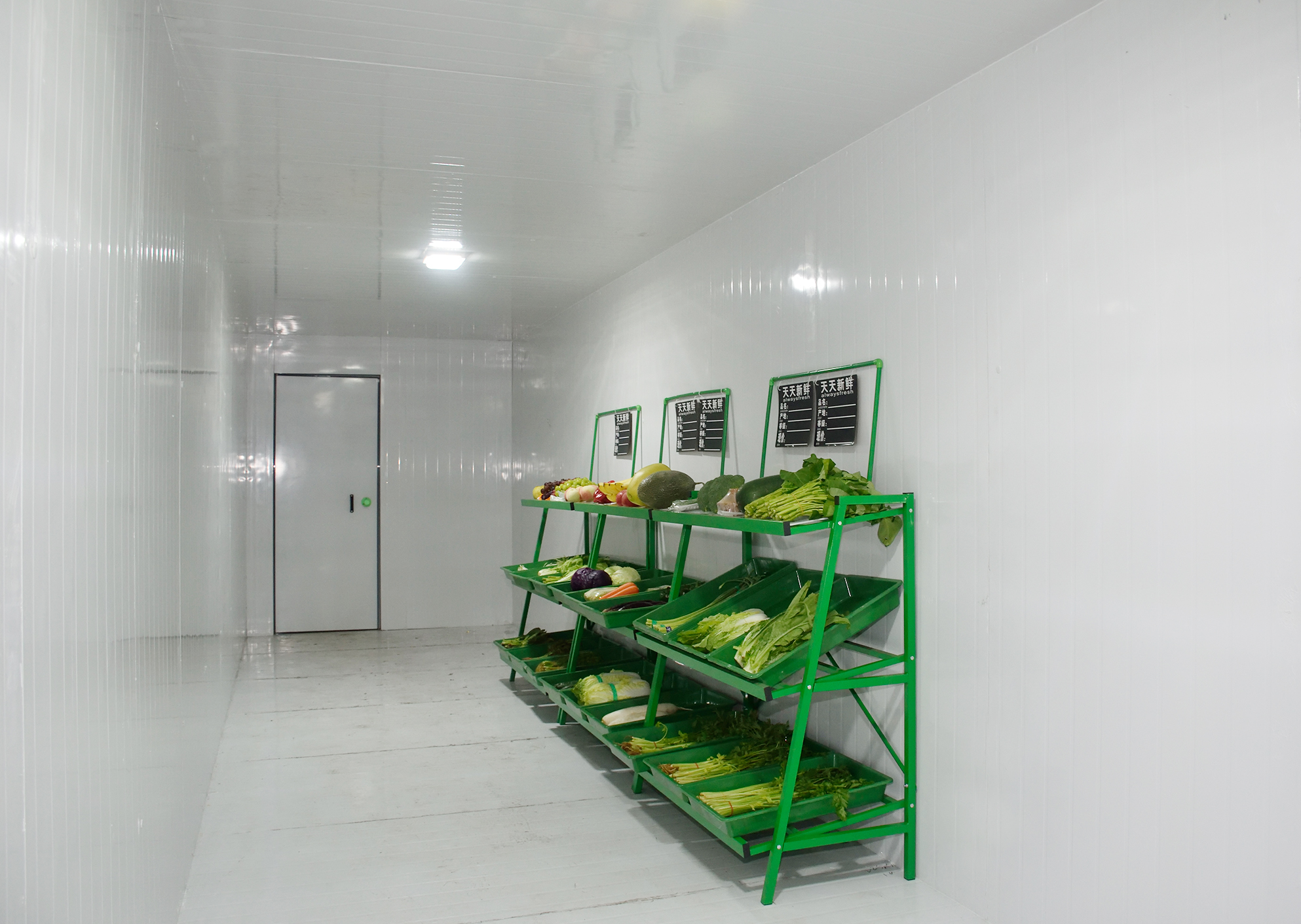
Start with the product. Different foods release moisture in different ways. A leafy vegetable cools differently from cooked rice, bread, sauce, or meat. Product size, thickness, water content, tray loading, and packaging condition all affect cooling time.
Next, define the target temperature. A meat processor may need to reduce cooked product from a high cooking temperature to chilled storage temperature, while a vegetable processor may only need pre-cooling before packing. This target temperature affects chamber size, refrigeration capacity, vacuum pump selection, and cycle time.
Then confirm production capacity. The system should match batch size and production rhythm. If the chamber is too small, operators may wait between batches. If the system is oversized, investment and energy use may increase without a practical return.
Finally, check plant layout. Loading method, trolley size, drainage, cleaning access, door-opening direction, and connection with cold rooms or packing lines should be planned before equipment selection. A practical layout saves labor every day.
Focusun specializes in ice-making and refrigeration systems for food processing, seafood, dairy, meat, bakery, cold storage, and industrial cooling projects. Instead of treating vacuum cooling as a single machine, Focusun can help customers review the whole flow: rapid chilling, chilled holding, freezing, ice usage, storage, and transportation.
Focusun Vacuum Cooler solutions for fruits, vegetables, and cooked food can be designed together with cold rooms, blast freezers, water chillers, ice machines, and other refrigeration units for factories that require a stronger temperature-control system.
Before asking for a quotation, prepare the basic production conditions. These details help the manufacturer size the system according to real production needs instead of offering a generic equipment list.
What is vacuum cooling in food processing?
Vacuum cooling is a rapid cooling method that lowers pressure inside a sealed chamber so that moisture evaporates at a lower temperature. This evaporation removes heat quickly before packaging, storage, or further processing.
Which foods are suitable for vacuum cooling?
Vacuum cooling is suitable for moist, porous, or high-surface-area foods such as leafy vegetables, mushrooms, herbs, cooked rice, ready meals, bakery products, and some cooked foods. Dense, dry, sealed, or moisture-sensitive products may need testing before system selection.
How does a vacuum cooler work for cooked food?
Hot cooked food is placed into a sealed chamber where pressure is reduced. Moisture evaporation removes heat from the food, helping ready meals, sauces, rice products, and central kitchen foods enter chilled storage or packing more quickly.
Can vacuum cooling replace a cold room?
For many suitable products, vacuum cooling is faster than a cold room because heat is removed through evaporation under reduced pressure. However, a cold room is still needed for stable storage after the rapid cooling stage.
Does vacuum cooling cause moisture loss?
Yes. Because evaporation removes heat, some moisture loss is part of the process. The level depends on food type, surface area, target temperature, and cycle setting. For many products, the benefit of rapid temperature control outweighs the controlled moisture loss.
How much does a vacuum cooling system cost?
The cost depends on chamber size, batch capacity, vacuum pump type, refrigeration system, automation level, hygiene design, and installation requirements. Accurate pricing requires product type, production volume, cooling target, and site details.
Does vacuum cooling help extend shelf life?
Vacuum cooling can support better cold-chain control by lowering product temperature quickly. It does not replace hygiene, packaging, or refrigeration, but it can improve post-process cooling efficiency and help preserve product quality.
Can vacuum cooling be used for vegetables?
Yes. Vacuum cooling is widely used for leafy vegetables, herbs, mushrooms, and fresh-cut produce because these products cool quickly under reduced pressure. It helps remove field heat or process heat before packing and transport.
What information should I provide before buying a vacuum cooler?
Provide product type, batch weight, inlet temperature, outlet temperature, required cycle time, packaging status, tray or trolley size, plant layout, power supply level, and hygiene requirements.
Can vacuum cooling work with other refrigeration methods?
Yes. Vacuum cooling is commonly combined with cold rooms, blast freezers, water chillers, ice machines, and refrigerated transport. The best combination depends on product type, cooling target, storage duration, packaging method, and processing flow.
