
The best ice machine for a hot and humid climate is not simply the model with the largest rated capacity. It is a machine designed around high ambient temperature, warm inlet water, limited ventilation, local water quality, and the actual cooling demand of the business.
For many tropical industrial projects, a water-cooled ice machine or a machine with a remote air-cooled condenser is the safest choice for stable production. However, a properly oversized air-cooled machine can still perform well when it is installed outdoors or in a genuinely well-ventilated equipment area.
The type of ice matters too. Tube ice is generally best for packaged edible ice and beverages. Flake ice is better for seafood, food processing, and rapid product cooling. Block ice works well for long-distance transport and locations where slow melting is more important than immediate cooling contact.
In other words, there is no universal “tropical ice machine.” The right answer is a combination of ice type, condenser design, refrigeration capacity, materials, controls, and site engineering.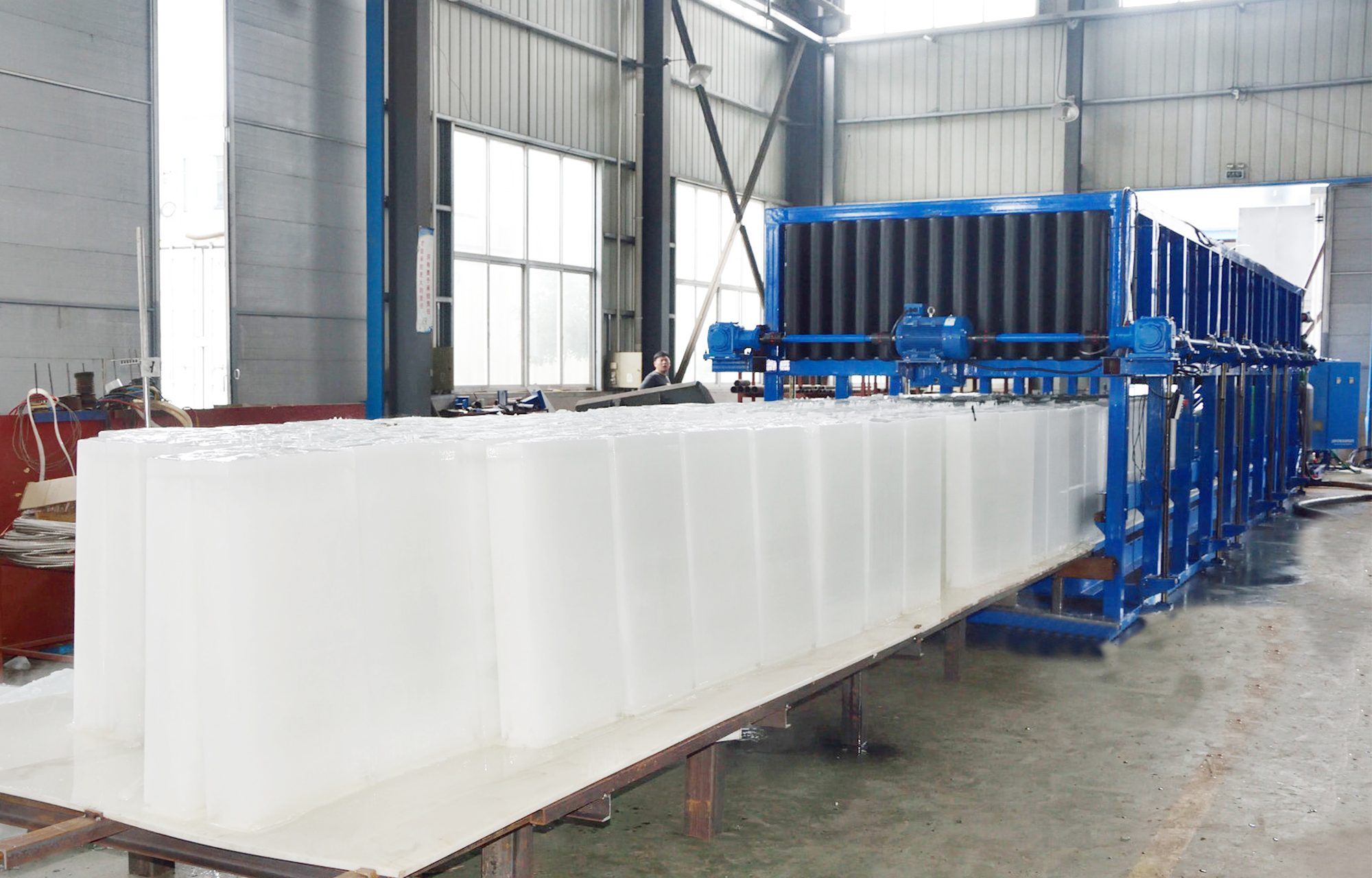
An ice machine must remove heat from water and release that heat through its condenser. In a cool environment, this process is relatively straightforward. In a tropical environment, the machine starts with two disadvantages: the surrounding air is already hot, and the incoming water may be considerably warmer than the conditions used for the manufacturer’s standard capacity rating.
Higher ambient temperature increases condensing pressure. The compressor works harder, electricity consumption rises, and the freezing cycle may become longer. If the condenser cannot reject heat quickly enough, daily production falls even though the machine continues running.
High humidity creates additional challenges:
Warm inlet water also adds a significant refrigeration load. A machine rated using relatively cool feed water may not achieve the same output when the local water remains warm throughout the day.
This is why buyers should never compare machines using nominal tones per day alone. The more useful question is: How much ice will this machine produce under my highest ambient temperature and actual water conditions?
Buyers often mix up two different decisions.
The first is the type of ice the machine produces:
The second is how the machine releases condenser heat:
A tube ice machine, for example, may be supplied with either an air-cooled or water-cooled condenser. A flake ice machine may use a remote condenser outdoors. A large block ice plant may use a cooling tower or evaporative condenser.
Choose the ice form according to the customer’s application. Then choose the condenser and refrigeration configuration according to the climate and installation site.
A tube ice machine produces hard, cylindrical pieces with a hollow center. Tube ice is easy to convey, weigh, package, and sell to restaurants, hotels, bars, supermarkets, event suppliers, and beverage distributors.
For a commercial ice factory in a hot climate, a water-cooled tube ice machine is often the strongest choice when stable water supply and treatment are available. Water cooling is less dependent on the temperature inside the machine room, so production remains more consistent during the hottest part of the day.
A remote air-cooled condenser is another good option. The condenser is installed outside the production room, allowing heat to be discharged outdoors instead of recirculating around the ice-making equipment.
A standard air-cooled tube ice machine can still be suitable for smaller operations if:
Buyers planning an edible ice factory can consult this practical tube ice machine guide for commercial and industrial production. It explains how capacity, ice size, storage, packing, water quality, and installation conditions affect the complete production line.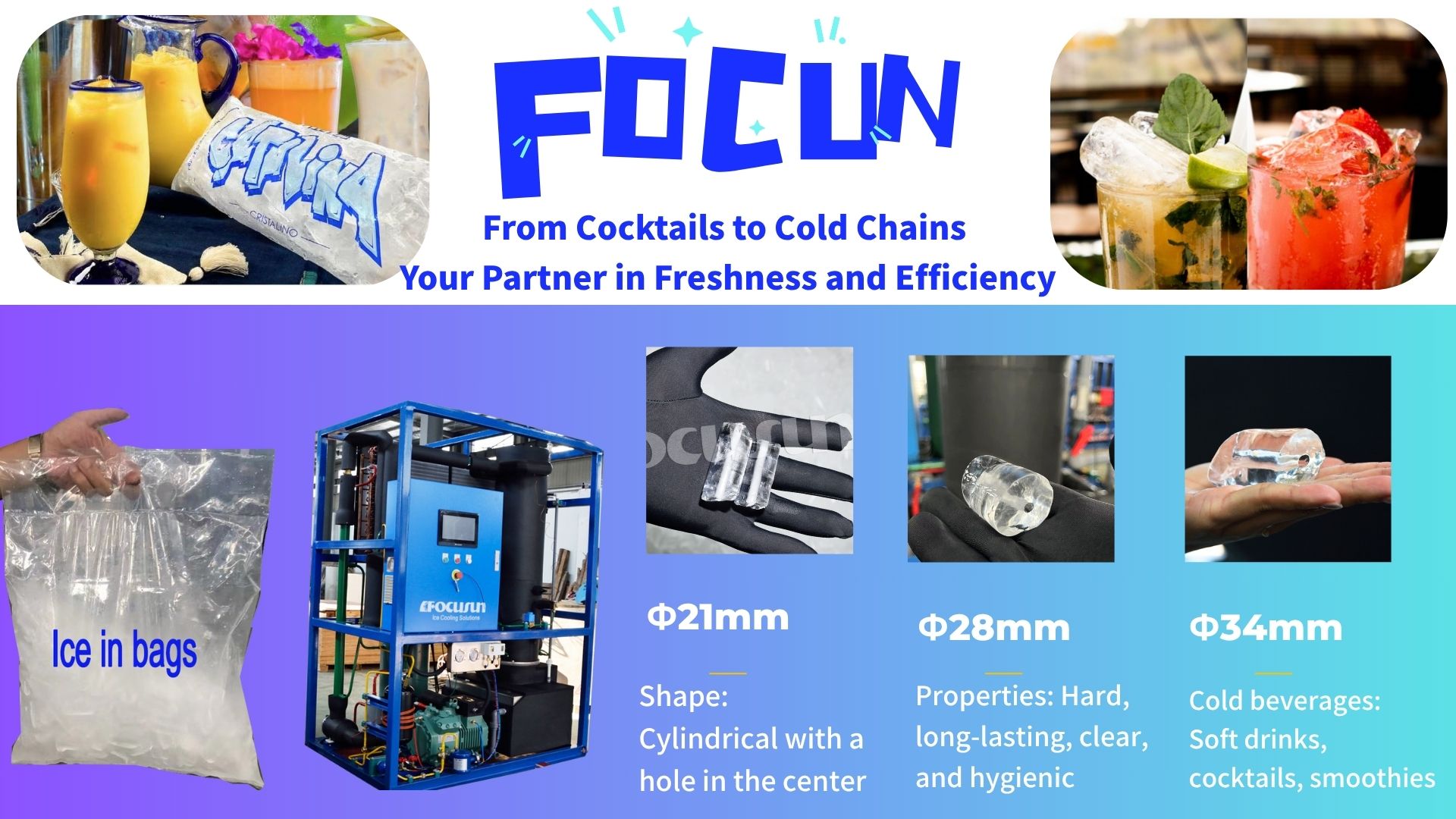
Flake ice is thin, soft, and easy to spread. Its large contact area allows it to cool fish, seafood, meat, vegetables, bakery dough, and industrial materials quickly.
For fishing ports, seafood markets, processing plants, and hot-climate food operations, an industrial flake ice machine is often more useful than a beverage-style cube or tube machine. The ice can surround irregular products and remove heat rapidly.
A freshwater flake ice machine suits land-based processing facilities, while a seawater model can be designed for marine and onboard applications. In either case, the evaporator, frame, fasteners, and electrical system should be protected against humidity and corrosion.
The article on how flake ice machines are used in Africa offers relevant examples for fisheries, bakeries, cold-chain operations, and food processing in high-temperature markets.
Block ice is a strong choice when the ice must survive storage, handling, and long-distance transport. Because a solid block has less exposed surface area than an equal weight of small ice pieces, it generally melts more slowly.
Block ice is commonly selected for:
Both direct cooling and brine block ice machines can operate in tropical climates. A brine plant is proven for large industrial volumes, but it needs more space and labor. Direct cooling systems are cleaner, more compact, and easier to automate.
The condenser must still be designed for the local climate. A robust ice-making method cannot compensate for an undersized heat-rejection system.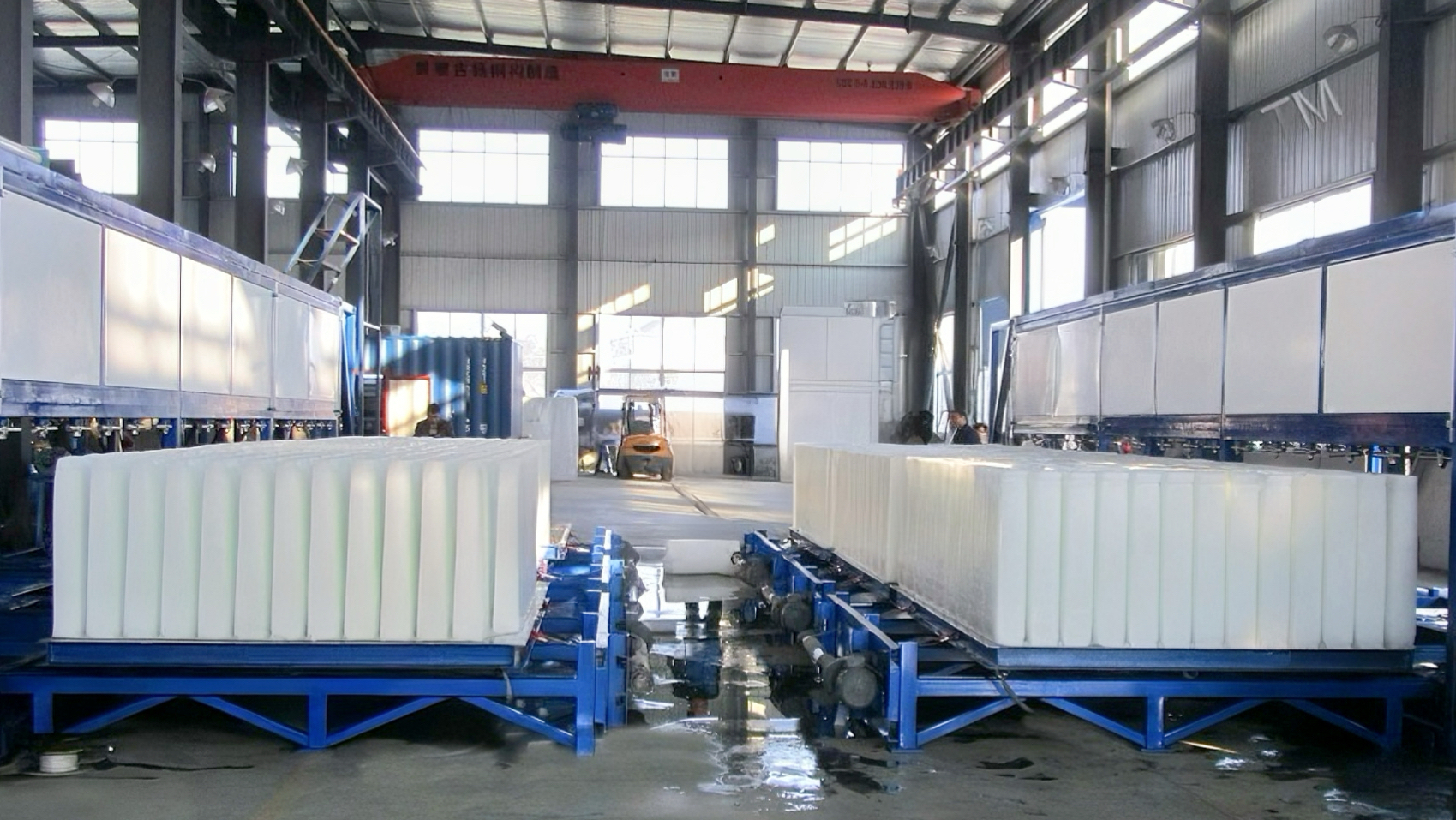
Commercial cube ice machines are convenient for hotels, restaurants, cafés, bars, and smaller beverage operations. They are compact and can produce attractive ice directly where it is used.
However, undercounter and self-contained cube machines are especially vulnerable to hot kitchens. Installing one beside ovens, fryers, dishwashers, or poorly ventilated walls can reduce output sharply.
In a consistently hot kitchen, choose a water-cooled unit where water use is acceptable, or a split machine with its condenser installed away from the kitchen. If an air-cooled model is used, provide generous clearance and a continuous path for cool intake air and hot exhaust air.
The condenser choice often determines whether an ice machine performs reliably in a tropical location.
|
Condenser option |
Best conditions |
Main advantage |
Main limitation |
|
Air-cooled |
Open, clean, well-ventilated site |
Simple installation and low water use |
Output is sensitive to ambient heat |
|
Water-cooled |
Hot or enclosed equipment rooms |
Stable heat rejection in high temperatures |
Higher water use and scale risk |
|
Remote air-cooled |
Hot facilities with suitable outdoor space |
Removes heat and noise from the production room |
More piping and installation work |
|
Evaporative condenser |
Large industrial plants |
Efficient heat rejection at high capacity |
Needs water treatment and careful maintenance |
For a fuller technical comparison, read this air cooling versus water cooling ice machine guide.
Water cooling should not be selected automatically. If water is expensive, scarce, hard, or unreliable, a once-through water-cooled condenser can become costly and difficult to maintain. A cooling tower or closed-loop system may reduce water waste, but it increases installation complexity.
Air cooling is attractive where water conservation matters. The key is to use a condenser with sufficient surface area and airflow for the maximum expected temperature—not the annual average.
Ask the supplier to state the expected daily output at your real design conditions. A useful quotation should identify:
If the quotation gives capacity only at standard laboratory conditions, it does not tell you what the plant will produce during the hottest season.
The Focusun article on details commonly overlooked before purchasing a tube ice machine also emphasizes the difference between theoretical capacity and real output under high ambient temperature, humidity, and warm water conditions.
The condenser needs enough heat-transfer surface and airflow or water flow to operate without excessive pressure. For air-cooled units, this may mean a larger coil, stronger fans, or a remote condenser.
Ask whether the proposed condenser is a standard configuration or has been selected specifically for tropical operation.
The compressor should be suitable for the required evaporating and condensing temperatures. A recognizable compressor brand is helpful, but the brand alone does not guarantee performance. The compressor, condenser, expansion device, evaporator, and control system must be correctly matched.
Also confirm whether spare parts and qualified refrigeration service are available in the destination country.
Humid, coastal, or marine environments can be aggressive. Look for:
In coastal areas, ordinary condenser fins may deteriorate quickly from salt-laden air. Protective coatings can extend service life, although coated coils must still transfer heat effectively and be cleaned correctly.
Hot climates often coincide with unstable power infrastructure. Voltage fluctuation, phase loss, and repeated outages can damage refrigeration equipment.
The installation should include:
A backup generator must be sized for compressor starting current, not only the machine’s normal running power.
Some buyers solve climate risk by purchasing a machine far larger than necessary. That can waste capital and create inefficient operation. Others buy a machine matching average sales exactly and then experience shortages during hot weather.
A better method is to calculate peak demand and request a performance curve for the local conditions.
Suppose a business requires 8 tones of ice per day during its peak season. If the proposed machine is expected to deliver only 85% of nominal output under the site’s hottest conditions, the necessary nominal rating is:
A 10-tonne machine may therefore be appropriate, provided storage and distribution can handle the output.
Do not apply a fixed derating percentage without supplier data. Actual performance depends on the machine, condenser, inlet water, ventilation, maintenance condition, and refrigeration design.
For large plants where output consistency is critical, this guide on choosing an industrial ice maker for stable daily production provides additional capacity and reliability considerations.
Even a well-designed tropical ice machine can perform badly in the wrong room.
An air-cooled condenser should not be installed inside a small, closed room. The condenser releases heat, the room becomes hotter, and the machine begins pulling its own hot discharge air back through the coil. This creates a cycle of rising pressure, falling capacity, and higher energy consumption.
Provide:
Outdoor condensers need protection against flooding, debris, accidental damage, and blocked airflow. Shade can help, but the cover must not trap hot air.
The complete factory layout should also include water treatment, ice storage, packing, cleaning, and dispatch. This broader guide on how to start an ice factory is useful for coordinating the machine with the rest of the operation.
Hard water forms mineral scale on heat-transfer surfaces. Scale acts like insulation, making the compressor run longer to produce the same quantity of ice.
For water-cooled condensers, poor water quality can affect both the ice-making circuit and the condenser circuit. Treatment may include sediment filtration, activated carbon, softening, reverse osmosis, or chemical control for cooling towers.
Test the source water before ordering the treatment equipment. An unnecessary treatment system wastes money, while an undersized system leaves the evaporator and condenser unprotected.
For edible ice, treatment must also provide water that meets the applicable drinking-water and food-safety standards.
Tropical ice machines need disciplined preventive maintenance.
Daily checks should cover water flow, unusual noise, leaks, pressures, ice quality, production time, and control-panel alarms. Operators should record the quantity produced during each shift.
Air-cooled condenser coils may need frequent cleaning where the air contains dust, grease, fibers, or salt. Water-cooled systems need inspection for scale, restricted flow, and cooling-water quality.
Regular maintenance should include:
A gradual increase in freezing time is an early warning. Do not wait until the machine stops completely.
Give every shortlisted supplier the same project information and request written answers:
Compare total ownership cost rather than purchase price alone. Energy, cooling water, treatment chemicals, maintenance, labor, lost production, and spare-parts availability can be more important than the initial saving on a cheaper machine.
The best ice machine for hot and humid climates is a properly sized, tropicalized system selected for a specific application and installation site.
For packaged edible ice, a water-cooled or remote-condenser tube ice machine is often the strongest all-round choice. For seafood and rapid process cooling, an industrial flake ice machine provides better contact and faster heat removal. For long-distance transport and remote distribution, block ice offers superior holding time. Hotels and restaurants can use commercial cube machines, but the condenser must be protected from hot, restricted kitchen conditions.
Water cooling generally provides more stable production in high heat, but only where water supply, drainage, treatment, and operating cost are acceptable. Air cooling remains practical when the condenser is generously sized and receives clean, unrestricted airflow. Remote air-cooled and evaporative systems provide additional options for larger plants.
The most important purchasing document is not the product brochure. It is a written performance proposal based on maximum local temperature, inlet water temperature, humidity, water quality, power supply, operating schedule, and required daily output. When those conditions are defined accurately, the right ice machine becomes much easier to identify—and far more likely to deliver its promised capacity throughout the hottest months.
