
When buyers compare industrial ice machines, the purchase price gets most of the attention. The electricity bill arrives later, every month, for years. That is why power consumption should be checked before you choose a machine, not after the factory starts running.
The useful number is not simply the motor size. It is the amount of electricity required to produce one metric ton of usable ice under your actual site conditions.
Start with three figures from the technical quotation:
Total running power in kilowatts (kW)
Expected operating hours per day
Actual ice output in tons per day
|
Daily electricity use (kWh) = running power (kW) x operating hours |
|
Electricity per ton (kWh/ton) = daily electricity use / actual daily output |
|
Monthly electricity cost = daily electricity use x operating days x local electricity rate |
Do not confuse running power with installed power. Running power estimates normal consumption while the machine is operating. Installed power is used for electrical design and may include reserve capacity or motors that do not run continuously.
Focusun's 10 tons/day tube ice machine lists total running power of 34.95 kW at its stated reference conditions. If it operates for 24 hours and produces the rated 10 tons, the simple estimate is:
|
34.95 x 24 = 838.8 kWh per day |
|
838.8 / 10 = about 83.9 kWh per ton |
At an electricity rate of USD 0.12 per kWh, the estimated machine electricity cost is about USD 100.66 per day, or roughly USD 3,020 for a 30-day month.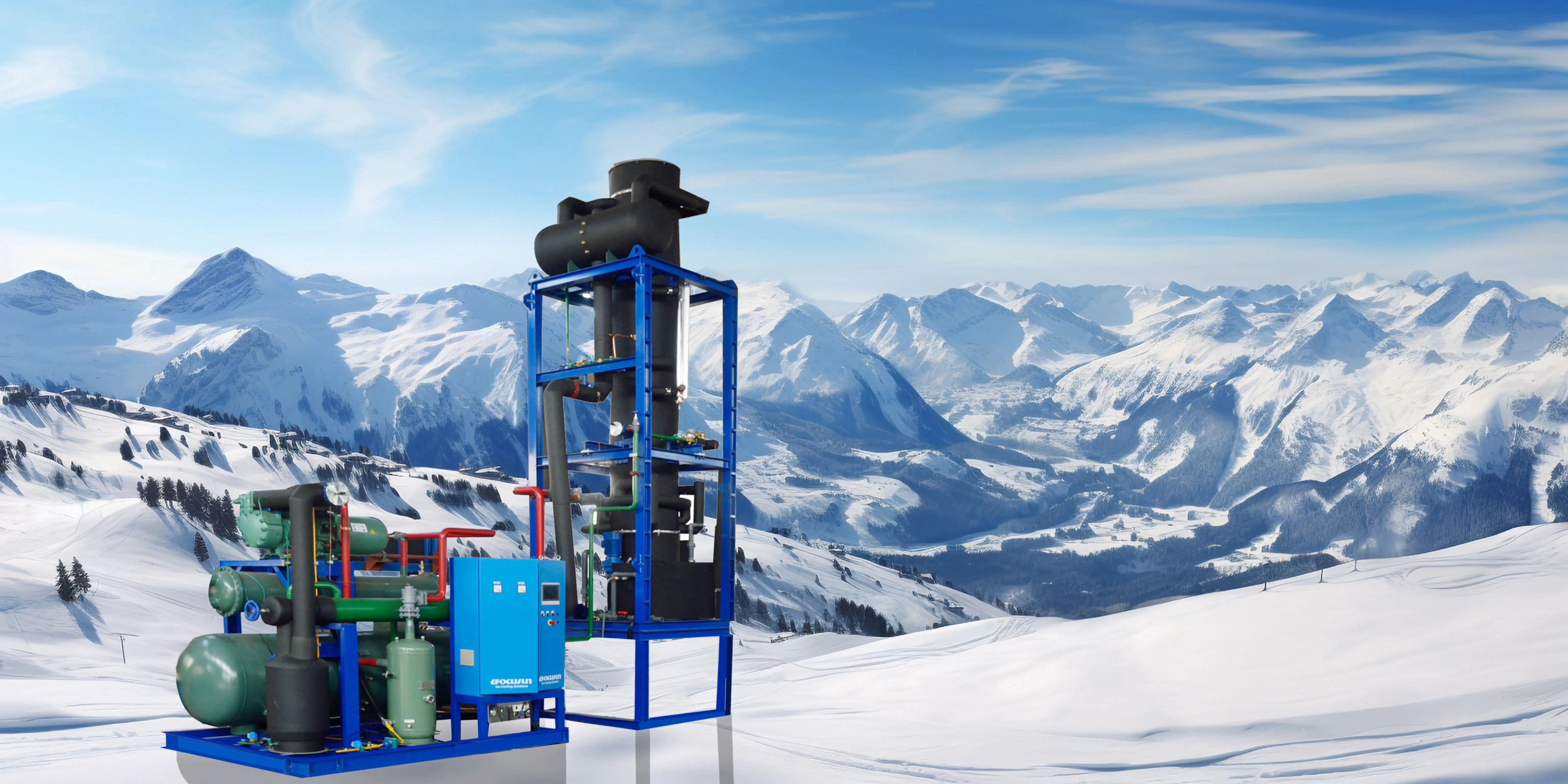
The same calculation using listed data gives about 82.3 kWh per ton for a 10 tons/day freshwater flake ice machine and about 95.6 kWh per ton for a 10 tons/day direct cooling block ice machine. These are planning examples, not universal guarantees. Actual consumption changes with climate, water temperature, configuration, ice thickness, maintenance, and real output.
Warm inlet water is one of the biggest hidden costs. The refrigeration system must remove more heat before freezing starts. High ambient temperature also makes the condenser work harder, especially with an air-cooled system.
Poor ventilation, scale inside heat exchangers, dirty condenser surfaces, low refrigerant charge, worn pumps, and repeated stop-start operation can all increase kWh per ton. Storage matters too. A machine may produce efficiently while a poorly insulated ice room allows part of the product to melt before sale.
For tropical projects, read the guide to choosing an ice machine for hot and humid climates before using a catalog figure as your budget.
A complete ice plant may also include water treatment, cooling-tower pumps, an ice conveyor, an ice hopper, a crusher, an automatic packing line, lighting, ventilation, and cold storage. Some equipment runs continuously; some operates only during loading or packing.
Ask suppliers to separate:
Ice machine running power
Installed power
Auxiliary equipment power
Estimated kWh per ton
Design conditions used for the estimate
This makes quotations easier to compare. It also connects the equipment price with the real operating budget. The industrial ice machine price guide explains the difference between a core machine quotation and a complete plant investment.
How to Lower Electricity Cost per Ton
Choose the right ice type first. Flake ice cools quickly because it has a large contact area. Block ice melts slowly and suits transport or distribution. Tube ice works well for edible ice and automated packing. Producing the wrong ice and then crushing, storing, or handling it inefficiently can erase any saving made on the machine.
Keep the condenser clean, control water quality, avoid placing air-cooled equipment in a closed hot room, and record daily output together with the electricity meter reading. The best efficiency check is simple: divide total kWh by saleable tons. If that number rises for several days, investigate before the monthly bill exposes the problem.
For a project estimate, send Focusun your required capacity, ice type, local electricity rate, ambient temperature, inlet-water temperature, voltage, and supporting equipment list. A useful proposal should show both production capacity and expected operating demand.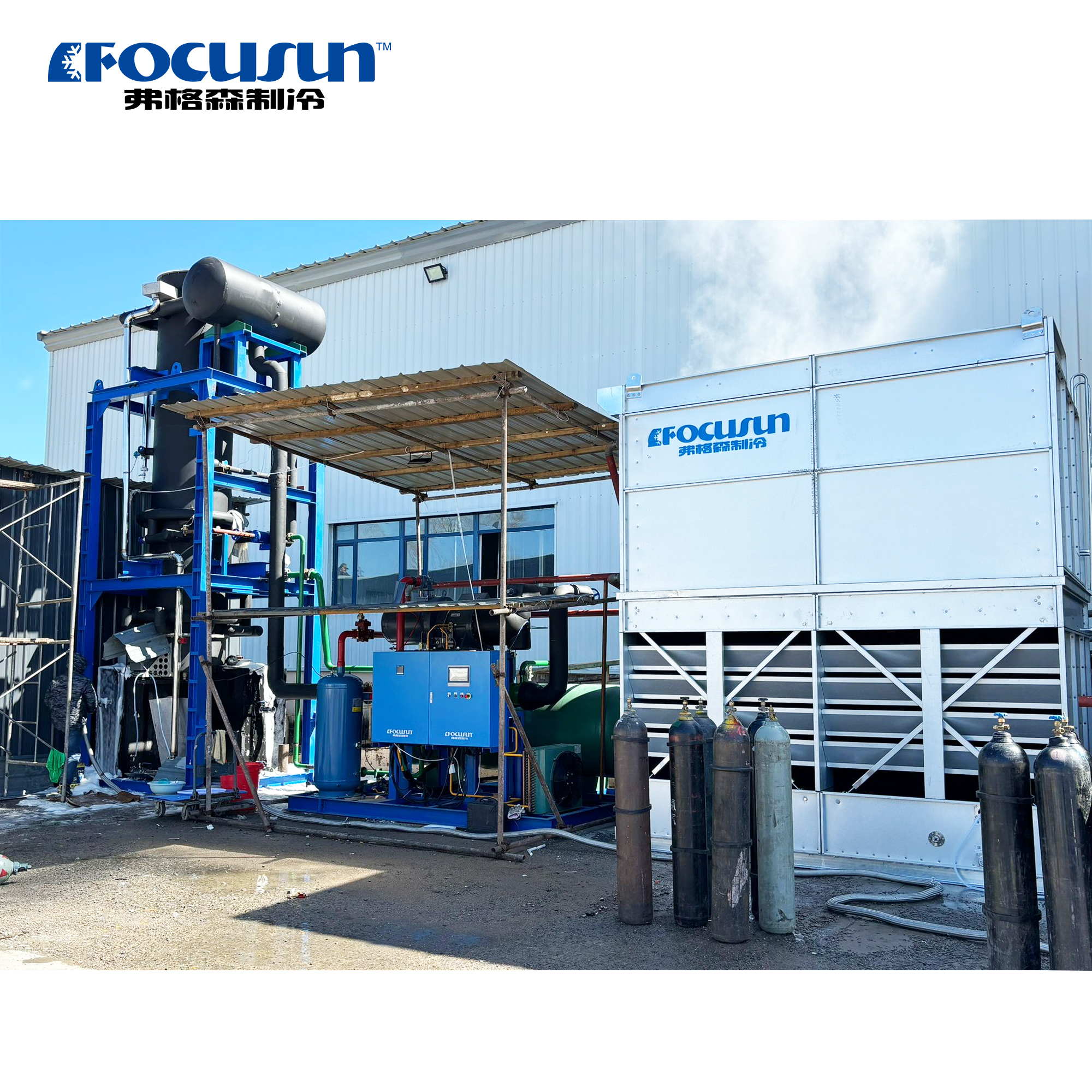
Daily electricity use depends on running power and operating time. Multiply the machine's total running power in kW by the number of hours it operates. For example, a 34.95 kW machine running for 24 hours uses about 838.8 kWh per day before any separately powered factory equipment is added. Actual use may be higher or lower because compressors cycle, production changes with temperature, and conveyors, packing machines, lighting, water treatment, or cold storage may have their own electrical loads.
2. How many kWh does it take to make one ton of ice?There is no single kWh-per-ton figure for every industrial ice machine. Ice type, compressor efficiency, condenser design, ambient temperature, inlet-water temperature, ice thickness, and maintenance all affect the result. A practical calculation is total daily kWh divided by actual saleable tons. Based on listed Focusun 10-ton examples, a simple rated-output estimate is roughly 82 to 96 kWh per ton for tube, freshwater flake, and direct cooling block ice systems. Confirm the design conditions before comparing suppliers. Use measured production whenever possible.
3. How do I calculate the monthly electricity cost of an ice machine?First calculate daily energy use: running power in kW multiplied by operating hours. Then multiply daily kWh by the number of operating days and your electricity tariff. A 34.95 kW machine operating 24 hours per day for 30 days uses about 25,164 kWh. At USD 0.12 per kWh, that equals approximately USD 3,020. Add separately powered equipment such as cold rooms, packing lines, cooling-tower pumps, water treatment, ventilation, and lighting for a complete factory estimate. Use the same tariff period for comparison.
4. What is the difference between running power and installed power?
Running power is the approximate electrical demand while the industrial ice machine is operating normally. Installed power is the capacity considered for cables, breakers, panels, transformers, and overall electrical design. Installed power is usually higher because not every motor has the same operating pattern, and the system needs adequate reserve. Neither number alone is enough for generator selection, because compressor starting current, power factor, simultaneous auxiliary loads, and local derating conditions must also be checked by the supplier and a qualified electrical engineer.
5. Does a larger industrial ice machine use less electricity per ton?Often, but not automatically. Larger machines can benefit from more efficient compressors, heat exchangers, and continuous operation, which may reduce kWh per ton. However, an oversized machine that frequently starts, stops, or runs at poor load can waste energy. A correctly sized plant usually performs better than a much larger machine purchased only for future growth. Compare energy consumption at realistic output, not only rated capacity, and include storage losses, maintenance downtime, seasonal demand, and the efficiency of auxiliary equipment.
6. Which type of industrial ice machine is most energy efficient?Efficiency depends on the application and site, so no ice type is always the winner. Flake ice can be efficient for rapid product cooling because it is used directly without crushing. Tube ice suits edible ice lines and automated packing. Direct cooling block ice avoids a brine tank and reduces some handling and maintenance. The better question is which system delivers the required cooling, shape, hygiene, storage life, and handling method with the lowest total kWh per saleable ton. Site conditions still decide the result.
7. Does hot weather increase industrial ice machine power consumption?Yes. High ambient temperature makes the condenser reject heat less effectively, and warm inlet water adds more heat that the refrigeration system must remove. Output may fall while the compressor runs longer, increasing kWh per ton. The effect is strongest when an air-cooled condenser is installed in a tight or poorly ventilated room. Tropical projects should be selected using realistic local design temperatures, adequate condenser capacity, clean airflow, suitable water treatment, and a production margin rather than relying on mild-climate catalog conditions.
8. Is a water-cooled ice machine cheaper to operate than an air-cooled machine?A water-cooled condenser can maintain more stable performance in hot or enclosed locations, but it also uses cooling water and requires pumps, a cooling tower, water treatment, and scale control. An air-cooled system avoids that water use and may be simpler where the air is clean, and ventilation is excellent. The cheaper option depends on local electricity price, water cost, climate, dust, available space, and maintenance capability. Compare annual electricity, water, cleaning, and downtime costs rather than choosing by condenser type alone.
9. How can I reduce the electricity consumption of an industrial ice machine?Keep condenser surfaces and filters clean, maintain correct refrigerant and water flow, control scale, and provide the ventilation specified for the machine. Use properly treated inlet water and avoid unnecessary stop-start cycles. Track electricity and actual ice output every day, then calculate kWh per ton. Good insulation in the ice room also prevents efficient production from being lost through melting. Finally, size the machine around peak demand and realistic site performance so it can run steadily without constant overload or excessive idle time.
10. What information is needed for an accurate ice plant power estimate?
Provide the required ice type and daily capacity, operating hours, maximum ambient temperature, inlet-water temperature, local voltage, phase and frequency, electricity tariff, water conditions, and preferred condenser type. Also list the required ice room, crusher, conveyor, hopper, water-treatment system, cooling tower, packing equipment, and backup generator. With these details, the supplier can separate running power, installed power, auxiliary load, expected kWh per ton, and monthly operating cost instead of giving a misleading estimate based only on the compressor. This supports a realistic comparison.
